Year-End Bookkeeping Checklist
Michael Benscoter
As year-end approaches, it is natural for small-business owners and self-employed professionals to turn their attention to tax deadlines, financial reports, and goals for the coming year. However, waiting until tax season to address bookkeeping can create avoidable pressure. A thoughtful review of your records now can make tax preparation and planning much more manageable.
At Benscoter Accounting Solutions, we provide personalized bookkeeping services, payroll support, tax preparation, and financial guidance for clients in Bristol, PA, and throughout Bucks County. Completing a year-end bookkeeping checklist helps create accurate, organized records while giving you a clearer view of where your business stands before the calendar changes.
Whether you handle your own QuickBooks bookkeeping or rely on monthly bookkeeping support, the following steps can help you close out the year with fewer loose ends and a stronger foundation for the months ahead.
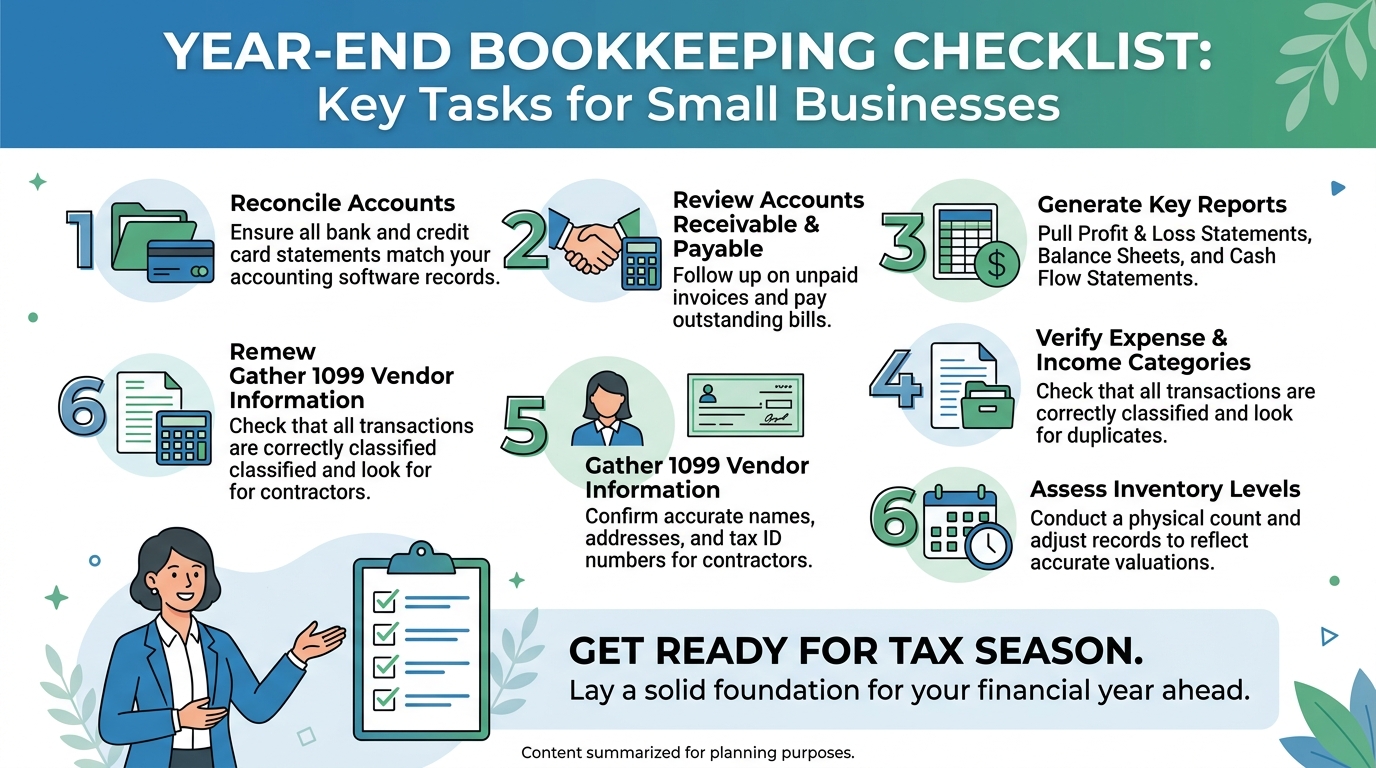
Reconcile Bank, Loan, and Credit Card Accounts
Start by reconciling every business bank account, credit card, and loan account. Compare the transactions in your accounting records with your statements to make sure the balances agree. This process can reveal transactions that were missed, entered twice, or recorded incorrectly.
Resolving those differences before the year closes prevents a larger cleanup project later. It also helps ensure that your financial reporting reflects actual business activity, rather than estimates or incomplete information.
Review Unpaid Customer Invoices and Vendor Bills
Year-end is an important time to review accounts receivable and accounts payable. Look over invoices that customers have not yet paid and decide whether a reminder or further follow-up is needed. If an amount is unlikely to be collected, it should be reviewed before the books are finalized.
Also confirm that outstanding vendor bills, recurring obligations, and other amounts owed by the business have been recorded. Accurate receivable and payable balances provide a more complete picture of your financial position and can reduce surprises during small business tax preparation.
Correct Uncategorized and Misclassified Transactions
Minor coding errors can build up over the course of a year. Take time to investigate entries sitting in uncategorized, miscellaneous, or suspense accounts. Whenever possible, assign each transaction to the appropriate income, expense, asset, or liability category.
Clean transaction coding makes small business accounting more useful. It improves the reliability of your income statement and balance sheet, makes business performance easier to understand, and helps simplify tax preparation when filing time arrives.
Confirm Payroll and Contractor Information
Payroll records deserve close attention during a year-end review. Verify that payroll entries, payroll tax filings, bonuses, and other employee compensation information are complete and accurately reflected in your books.
If you work with independent contractors, confirm that contractor payments have been tracked properly and that required W-9 forms are available. Addressing these items early can help avoid delays when preparing W-2s, 1099s, and other year-end tax documents. Benscoter Accounting Solutions can help businesses in Bristol, Levittown, Bensalem, and surrounding Bucks County communities stay organized with dependable payroll services and contractor tax support.
Check Owner Pay, Inventory, and Business Assets
Owners should make sure shareholder distributions, partner draws, guaranteed payments, and other owner compensation entries have been recorded correctly. Accurate treatment of these transactions is important for maintaining clear financial records and supporting appropriate LLC tax preparation or other business filings.
This is also a good time to review inventory and fixed assets. Businesses with inventory should consider completing a physical count as close to year-end as practical to compare actual quantities with recorded balances. Review equipment purchases, asset disposals, and items that are no longer in use so your records remain current.
Look for Unusual Activity in Financial Reports
Your year-end profit and loss statement, balance sheet, and cash flow records can point to issues that need attention. Review the reports for unexpected expenses, large changes in income or costs, unusual account balances, and transactions that do not fit normal business activity.
Finding irregularities before closing the books gives you time to investigate while the details are still accessible. It also allows corrections to be made before financial reports are used for tax preparation, tax planning, or decisions about the coming year.
Gather Records Needed for Tax Filing
Organizing tax documents before filing deadlines approach can save time and reduce stress. Keep important items together, including payroll reports, loan statements, receipts, sales tax filings, charitable contribution records, and supporting documentation for business expenses.
It is also helpful to prepare the information needed for W-2s, 1099s, and other year-end filings in advance. For small-business owners, contractors, and self-employed clients, early organization makes it easier to identify what may be needed for tax help and personalized tax services.
Plan for Cash Needs and Upcoming Expenses
A complete review should look ahead as well as back. Consider your expected cash needs for the first several months of the new year, including payroll, estimated tax payments, loan obligations, insurance renewals, seasonal changes in revenue, and planned equipment purchases.
Effective cash flow management can bring potential challenges into view early enough to plan for them. Rather than reacting to a shortfall or an unexpected bill, you have more time to make informed decisions about the business.
Review Financial Access and Account Security
Year-end is an ideal opportunity to confirm who can access your banking platforms, accounting software, payroll systems, and shared financial files. Employee responsibilities, vendor relationships, and software subscriptions can change over time, so permissions should be reviewed regularly.
Remove access that is no longer needed, update passwords, and use multi-factor authentication whenever it is available. These practical steps help protect the financial information that supports your bookkeeping and accounting services.
Evaluate Recurring Charges and Your Business Structure
Review monthly and annual charges for subscriptions, software, and outside services. You may find duplicate tools, unused subscriptions, or services that no longer provide enough value to justify the expense. Identifying these costs can create opportunities to reduce unnecessary spending before the new year.
It can also be useful to consider whether your current entity structure and tax election still fit your income, payroll arrangements, and long-term goals. A year-end financial review provides an opportunity to discuss tax planning considerations before tax season is underway.
Use Your Records to Build a Better Plan
Before finalizing the books, make sure mileage logs, travel documentation, receipts, and other expense records are complete and well organized. Strong documentation supports business deductions and makes future review easier.
Then use the information in your year-end financial reports to set realistic budgets and goals. A conversation about estimated tax payments, retirement contributions, equipment purchases, and other planning decisions can help you enter the new year with greater clarity.
Benscoter Accounting Solutions is proud to serve individuals, entrepreneurs, and small businesses from our Bristol, PA office. If you need help with bookkeeping for your small business, payroll, tax preparation, or a year-end financial review, our team is here to provide friendly, reliable guidance. Completing these steps now can improve financial accuracy, ease tax-season stress, and help your business begin the new year on solid footing.