The Role of a Bookkeeper Versus an Accountant: What’s the Difference?
Michael Benscoter
Keeping business finances organized is essential, whether you are self-employed, running a growing LLC, or managing an established company. Clear, current financial records make everyday decisions easier and give you a more reliable view of where your money is going.
At Benscoter Accounting Solutions, we often hear business owners use “bookkeeper” and “accountant” interchangeably. While both roles support your financial health, they serve different purposes. Understanding the distinction can help you choose the right level of support for your business in Bristol, Bucks County, and the surrounding communities.
What a Bookkeeper Does for Your Business
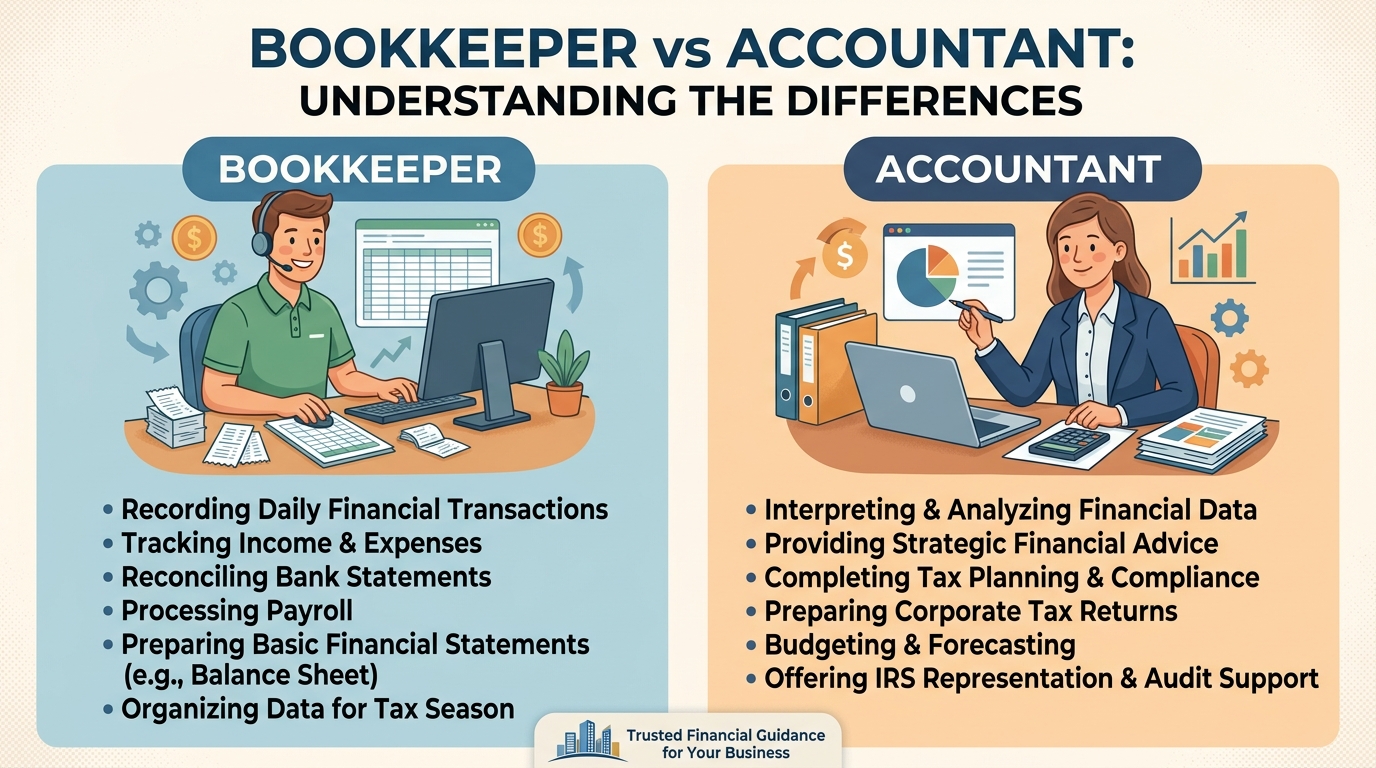
A bookkeeper handles the routine recording and organization of your company’s financial activity. The goal is to keep the books accurate, complete, and current so you are not left trying to reconstruct months of transactions later.
Bookkeeping services commonly include entering income and expenses, reconciling bank accounts, tracking invoices and receipts, and managing accounts payable and accounts receivable. A bookkeeper may also support payroll services and maintain the records needed to understand your day-to-day financial position.
Think of bookkeeping for small business as the working foundation of the entire financial system. When transactions are categorized correctly and records are updated consistently, you can review dependable information whenever you need it.
Monthly bookkeeping also helps catch small discrepancies before they become larger concerns. Instead of waiting until tax preparation is around the corner to find missing paperwork or unclear expenses, business owners can stay informed throughout the year.
Why Accurate Books Matter
Organized books create a clearer picture of revenue, spending, and cash flow management. This information can help you monitor what is happening in the business now, rather than relying on assumptions or an outdated bank balance.
Reliable records also reduce stress when you need financial reporting, are preparing documents for a lender, or are ready to address tax obligations. For contractors, entrepreneurs, and self-employed individuals, consistent documentation can be especially important when tracking business-related income and expenses.
At Benscoter Accounting Solutions, our bookkeeping services are designed to provide practical support without making financial tasks feel overwhelming. Clean, organized records give you a stronger starting point for tax planning, business decisions, and future growth.
How an Accountant Supports Bigger Financial Decisions
Where a bookkeeper records and organizes financial information, an accountant reviews that information to provide analysis, guidance, and planning support. Accounting services build on accurate books by helping business owners understand what the numbers mean.
An accountant may prepare tax filings, develop financial statements, review available deductions, assist with tax planning, and help maintain compliance with financial requirements. Accountants can also provide strategic insight when a business is evaluating important choices.
For example, a business seeking financing, considering expansion, or planning for a major purchase may need projections and a clear assessment of its financial position. Those recommendations are far more useful when they are based on accurate, up-to-date bookkeeping records.
For small businesses in Bristol and nearby areas, Benscoter Accounting Solutions provides personalized tax and financial services that connect day-to-day recordkeeping with informed long-term planning. Our approach is straightforward, friendly, and tailored to the needs of each client.
The Connection Between Bookkeeping and Accounting
Bookkeeping and accounting are not competing services. They work together to create a more complete financial process for a business.
The bookkeeper documents the company’s regular financial activity and keeps the underlying records organized. The accountant then uses those records to deliver tax guidance, financial analysis, and recommendations that support sound decision-making.
When the books are current, an accountant can spend less time sorting through incomplete information and more time identifying planning opportunities. That can mean more efficient tax preparation, better financial reporting, and more meaningful guidance around your goals.
In other words, quality bookkeeping gives accounting services the dependable information they need to be most effective. Both roles can contribute to a business owner’s confidence and peace of mind.
Signs You May Need Bookkeeping Services
Many companies benefit from bookkeeping support before they need more extensive accounting assistance. If financial tasks are regularly being pushed aside because you are focused on serving customers or completing jobs, it may be time to bring in help.
A bookkeeper may be a good fit if:
- You are behind on entering sales, purchases, or other day-to-day transactions.
- Receipts, invoices, and bank records are difficult to keep organized.
- You need current reports that show the financial condition of your business.
- You want help maintaining your books consistently throughout the year.
- You use QuickBooks bookkeeping tools but need support keeping the information accurate.
Regular bookkeeping can give you a better view of your finances while reducing the chance that errors or missing records create problems later. It also helps make the transition into tax preparation much smoother.
When Accounting Support Is the Better Fit
There are times when a business needs more than transaction tracking and document organization. An accountant can be particularly valuable when financial information must be interpreted, reported, or used to guide an important decision.
You may want to work with an accountant when:
- You are preparing and filing business tax returns.
- You need tax help for self-employed work, contractor income, or LLC tax preparation.
- You want help identifying deductions and planning ahead for taxes.
- You need financial statements for a lender, investor, or other third party.
- You are applying for financing or planning for business growth.
- You need financial guidance before making a significant business decision.
An accountant can help translate your financial data into useful direction. Rather than simply seeing a list of transactions, you can better understand the financial factors that may affect your business goals.
Why Many Small Businesses Use Both
For many business owners, the best choice is not deciding between a bookkeeper and an accountant. It is using both services in ways that match the needs of the business.
A bookkeeper keeps records clean and current throughout the year. An accountant uses those records to assist with tax preparation, financial analysis, reporting, and forward-looking tax planning.
This combination can provide greater clarity, reduce the pressure that comes with tax deadlines, and support better decisions as the company evolves. It also means your financial information is more likely to be ready when opportunities or challenges arise.
Benscoter Accounting Solutions works with small businesses, blue-collar professionals, entrepreneurs, and self-employed clients who want dependable financial support without unnecessary complexity. Whether you need monthly bookkeeping, small business accounting, payroll support, or personalized tax services, we can help you stay organized and prepared.
Choose Financial Support That Fits Your Needs
Knowing the difference between bookkeeping and accounting makes it easier to determine what your business needs now and where additional support may be helpful later. Bookkeeping keeps the financial foundation in order, while accounting helps you use that information to make informed decisions.
If your books are behind, your records feel scattered, or you want a clearer view of your company’s financial health, professional bookkeeping can make a meaningful difference. Accurate records support smoother tax preparation and give you more confidence in the information behind your decisions.
As a trusted local accounting firm in Bristol, PA, Benscoter Accounting Solutions can help with bookkeeping, financial reporting, payroll, small business tax services, and personalized financial guidance. Contact us at (215) 946-1754 to learn how we can help keep your business financially organized and ready for what comes next.