Steps To Avoid Small Business Audits
Michael Benscoter
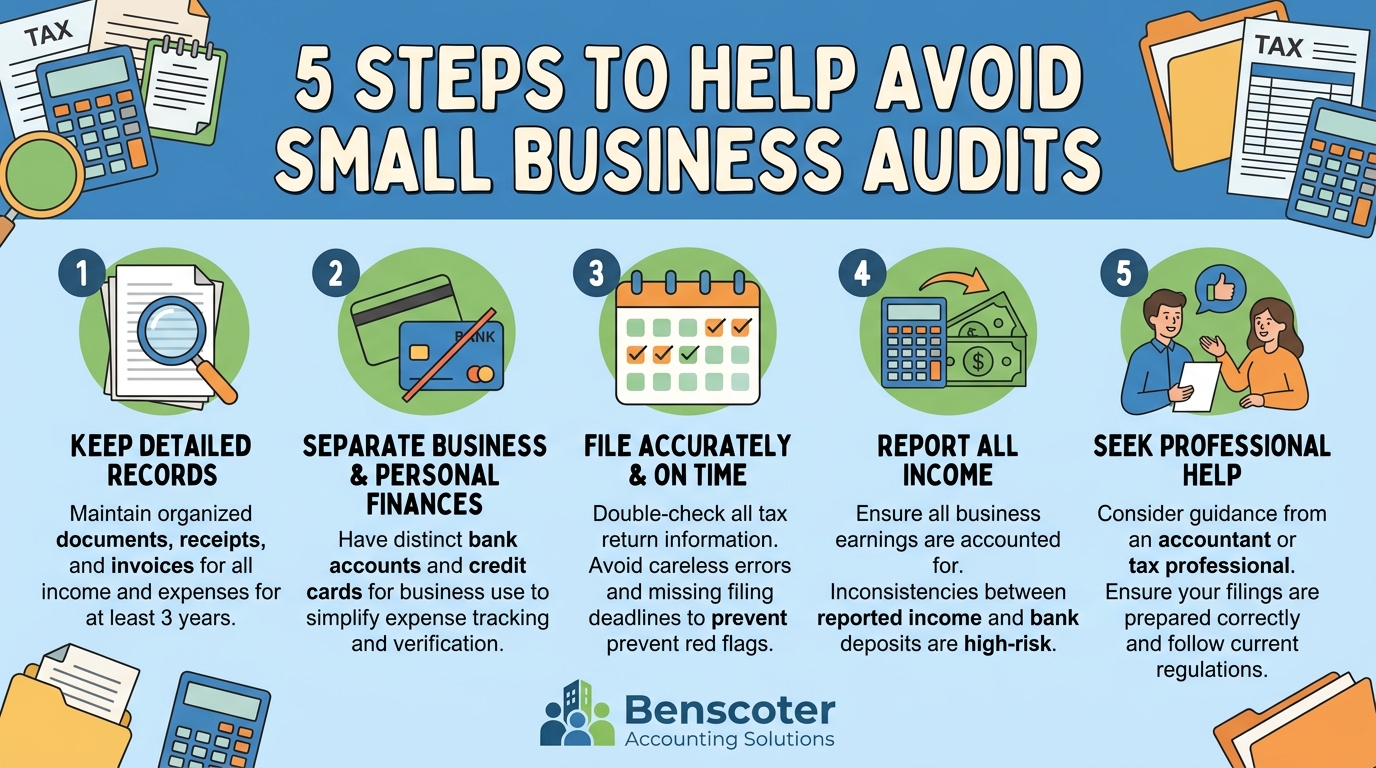
Although no business can guarantee that the IRS will never review a tax return, thoughtful financial habits can lower the risk of avoidable questions. Accurate reporting, organized records, and timely filings give you a stronger foundation if additional documentation is ever requested.
At Benscoter Accounting Solutions, we help small businesses, self-employed professionals, and entrepreneurs in Bristol, PA, keep their accounting and tax responsibilities manageable. With dependable bookkeeping, payroll support, and personalized tax preparation, business owners can approach tax season with greater confidence.
Build a Reliable Recordkeeping System
Clear, current records are one of the best protections a business can have. Your books should document the income you receive, the expenses you pay, available deductions and credits, and other financial activity connected to the business.
Trying to piece together a year of transactions shortly before a filing deadline can leave gaps, create inaccuracies, and make tax preparation more stressful. Routine bookkeeping for small businesses makes it easier to confirm numbers, support your return, and understand the financial health of your company throughout the year.
Benscoter Accounting Solutions provides bookkeeping services designed to help local owners keep their records organized and useful. Whether you use QuickBooks bookkeeping or another system, consistent updates help create a cleaner financial trail.
Keep Personal and Business Transactions Separate
Combining household spending with business purchases can quickly complicate small business accounting. Separate business bank accounts and credit cards make it easier to identify legitimate business transactions and support the deductions claimed on your return.
When every expense runs through the same account, determining what belongs to the business becomes much more difficult. Keeping finances separate improves bookkeeping, reduces confusion, and helps ensure documentation is available if the IRS asks about a particular charge.
Report Every Source of Business Income
Complete income reporting is essential for tax compliance. The figures on your return should align with your accounting records, bank deposits, payment processor summaries, and any tax forms issued to your business.
This deserves special attention for owners who accept credit card payments or receive funds through online marketplaces and payment applications. Payments processed through PayPal, Venmo, Square, Etsy, eBay, and similar platforms should be included in the review process before a return is filed.
If information reported to the IRS does not match the income reflected on your return, the difference may result in an IRS notice or further review. Using verified figures instead of estimates can help prevent discrepancies and make IRS help easier to obtain if a question arises.
Submit Complete Returns by the Deadline
Incomplete or late tax returns often lead to problems that could have been avoided. Missing forms, conflicting information, and incorrect details may lead to penalties, notices, or requests for more records.
Beginning tax preparation early gives you time to collect documents, reconcile your books, and address open questions before deadlines approach. A complete, well-supported filing reflects a careful approach to tax compliance and can reduce follow-up issues.
As a Bristol, PA accountant serving area businesses, Benscoter Accounting Solutions can help clients organize the information needed for small business tax services and individual tax preparation. Early planning makes the process less rushed and more reliable.
Stay on Track With Payroll Taxes
Payroll tax obligations require close attention because they include amounts withheld from employee pay. Errors involving payroll deposits, payments, or filings can create penalties and may bring added attention from tax authorities.
Businesses should make payroll tax deposits accurately and on time. Late deposits, underpayments, and filing mistakes can lead to avoidable consequences, while consistent payroll procedures support good standing and reduce compliance concerns.
Reliable payroll services can help business owners maintain a dependable process rather than trying to catch up after an issue develops. This is especially valuable for growing companies that need to balance employee responsibilities with day-to-day operations.
Document Vehicle, Travel, and Meal Deductions
Vehicle costs, business travel, and meals may qualify as deductions, but they need strong support. Records should show what was spent, when the expense occurred, and the business purpose behind it.
Documentation matters even more when a cost could be viewed as partly personal. Large, poorly supported, or personal-looking deductions may raise questions. Keeping thorough records helps substantiate appropriate deductions and reduces uncertainty around audit risk.
Make Sure Reported Income Fits Your Financial Picture
In some reviews, the IRS may consider more than the business return itself. Questions can arise if reported business income appears low while personal spending appears substantially higher.
There may be valid reasons for that difference, including savings, loans, owner distributions, a spouse’s income, or other documented funding sources. The important step is retaining records that can explain the situation if it is questioned.
Address Repeated Business Losses Carefully
Many businesses have periods of lower profitability, particularly while getting started or during a slow cycle. One loss year is not necessarily unusual or cause for concern.
However, recurring losses over several years without evidence of a path to profitability can attract attention. Keep documentation showing that you operate with a genuine intention to earn a profit, including business plans, performance records, and changes you make to improve operations.
Classify Workers Based on the Working Relationship
Worker classification remains an important tax compliance issue. Whether someone is an employee or independent contractor depends on the actual working relationship, not simply the preference of the business or worker.
Misclassifying an employee as an independent contractor can affect payroll taxes, tax withholding, unemployment taxes, benefits, and reporting requirements. Proper classification is an important part of maintaining sound payroll and contractor tax practices.
Use Reasonable Compensation for S Corporation Owners
Owners operating through an S corporation should periodically review how they are paid. In general, owner-employees who actively provide services to the business should receive reasonable wages for the work they perform.
When an owner receives significant distributions while taking little or no payroll compensation, the IRS may question whether some distributions should have been treated as wages subject to payroll taxes. Regularly reviewing compensation practices can help identify potential concerns before they become a larger issue.
If your business receives an IRS notice or audit contact, remain calm and respond carefully. Gather the requested records and seek professional guidance before providing information so you can address the matter appropriately.
Benscoter Accounting Solutions offers personalized tax services, bookkeeping, payroll support, and financial guidance for small businesses in Bristol, PA, and nearby communities, including Bucks County, Levittown, and Bensalem. Contact our team at (215) 946-1754 to discuss your records, tax compliance concerns, and next steps for keeping your business prepared.