6 Smart Tax Moves to Make Before Year-End - Business
Michael Benscoter
As December 31 approaches, it is a good time for business owners to look beyond closing the books and begin making informed tax decisions. The actions you take before the calendar changes can affect your current-year tax picture, cash flow, and how smoothly tax preparation goes in the months ahead.
At Benscoter Accounting Solutions, we help small businesses, self-employed professionals, and contractors in Bristol, PA, and throughout Bucks County turn year-end tax planning into a clear, manageable process. A careful review of your income, expenses, bookkeeping, and upcoming goals can uncover opportunities that are no longer available once the year ends.
Here are six practical tax moves to discuss with your accounting professional before year-end.
1. Revisit Your Estimated Tax Payments
Business income does not always follow the same pattern from one quarter to the next. A strong stretch of sales, a new contract, or an unexpected slowdown can mean the estimated tax payments you made earlier in the year no longer match your likely tax obligation.
Reviewing your projected income alongside the payments already submitted can help identify a potential shortfall before it becomes an unwelcome surprise. It can also help you avoid paying more than necessary in advance. This is especially important for self-employed individuals, contractors, and LLC owners whose income may vary throughout the year.
Accurate, up-to-date bookkeeping gives you a better starting point for this review. Benscoter Accounting Solutions can help organize the numbers so you have a clearer view of where your business stands before filing season.
2. Complete Necessary Deductible Purchases
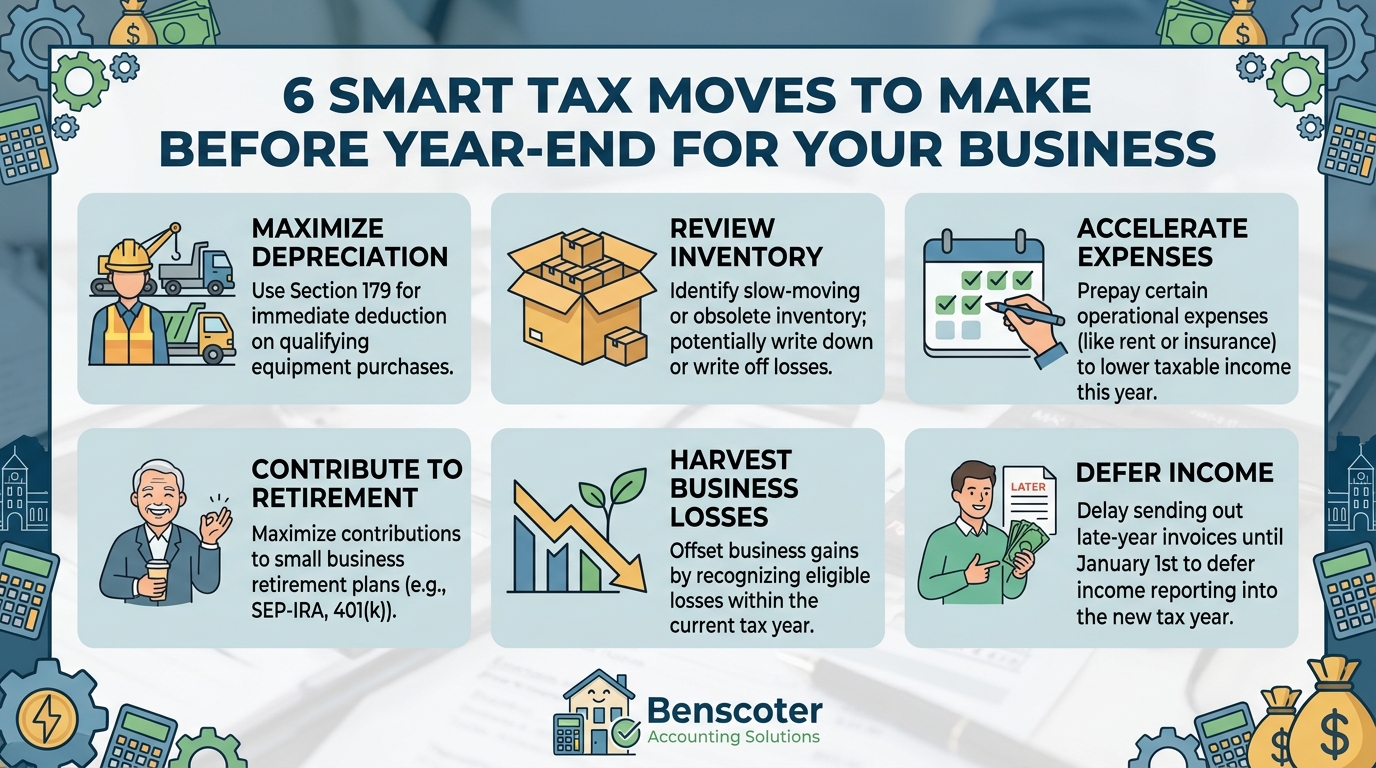
If you already expect to buy equipment, software, supplies, or other ordinary items needed to run your business, consider whether completing that purchase before year-end makes sense. Depending on your circumstances, an eligible expense paid by December 31 may be deductible on the current year’s return.
Moving forward with planned business purchases can be particularly useful when your income was higher than expected. Legitimate expenses may reduce taxable income while providing your business with items it genuinely needs to operate effectively.
The key is to make thoughtful decisions, not rushed purchases. Tax considerations should support a real business purpose, whether that means improving your QuickBooks bookkeeping process, replacing necessary equipment, or stocking up on operational supplies.
3. Consider the Timing of Income
For businesses that use cash-basis accounting, when income is received may influence the year in which it is taxable. When appropriate and when cash flow permits, postponing an invoice or delaying collection until early January could shift that income into the following tax year.
This approach may be worth evaluating if you expect to be in the same or a lower tax bracket next year. However, tax planning should never disrupt the financial health of your company. A decision to defer income should account for payroll, operating costs, and the cash your business needs to keep moving forward.
For small business owners in Bristol, Levittown, Bensalem, and surrounding Bucks County communities, a year-end review can help connect tax timing decisions with a broader cash flow management plan.
4. Review Your Retirement Plan Contributions
Year-end is an ideal time to check the progress of your retirement savings plan. Depending on the type of plan you use, contributions to options such as a SEP IRA, SIMPLE IRA, or 401(k) may help lower taxable income while supporting your long-term financial security.
Before the year closes, confirm whether you are on pace to meet your contribution goals. It is also important to understand the contribution limits and deadlines that apply to your plan, since they can differ based on the account and your business structure.
A proactive review allows retirement planning and tax planning to work together. Benscoter Accounting Solutions provides personalized tax services that help clients consider both their immediate filing needs and the financial decisions that support future goals.
5. Evaluate Depreciation Options for Business Assets
If your business acquired qualifying equipment or other assets during the year, now is the time to review possible depreciation treatment. Section 179 and bonus depreciation may allow eligible businesses to deduct a significant part of an asset’s cost sooner rather than spreading that deduction across several years.
Accelerating a depreciation deduction may reduce current taxable income and preserve more cash for business needs. However, eligibility depends on the asset, how it is used, and other details that should be evaluated carefully.
Timing matters here as well. In many cases, a qualifying asset must be placed in service by the end of the year for the deduction to apply to that year’s return. Keeping complete records of purchases and use is an important part of small business accounting and tax preparation.
6. Plan Ahead for Bonuses and Charitable Contributions
The final weeks of the year can also be an appropriate time to consider employee bonuses and charitable giving. Properly structured bonuses can recognize your team’s hard work while potentially creating a deductible business expense.
Contributions to qualified charitable organizations may also offer tax advantages while allowing your business to support causes that matter to your customers, employees, and community. As with other tax strategies, documentation and timing are essential.
To preserve potential current-year benefits, bonuses should be handled correctly and charitable gifts should be completed before the close of the tax year. Keep the records needed to substantiate each transaction when it is time to prepare your return.
Do Not Put Off Year-End Tax Planning
Waiting until tax season to look at your financial information can narrow your choices. Many valuable strategies must be completed before December 31, which makes the final part of the year a critical planning window for business owners.
Whether you need to review estimated payments, organize monthly bookkeeping, plan retirement contributions, assess depreciation, or prepare for bonuses and charitable giving, early action can reduce uncertainty and make tax preparation less stressful. It can also help your business enter the new year with better financial reporting and stronger visibility into cash flow.
Benscoter Accounting Solutions offers approachable small business tax services, bookkeeping services, payroll services, and financial support for clients in Bristol, PA, and the greater Bucks County area. Contact our team at (215) 946-1754 to schedule a personalized year-end planning conversation and explore the tax strategies that may fit your business.